Buying a Diamond From the Country That Changed the World
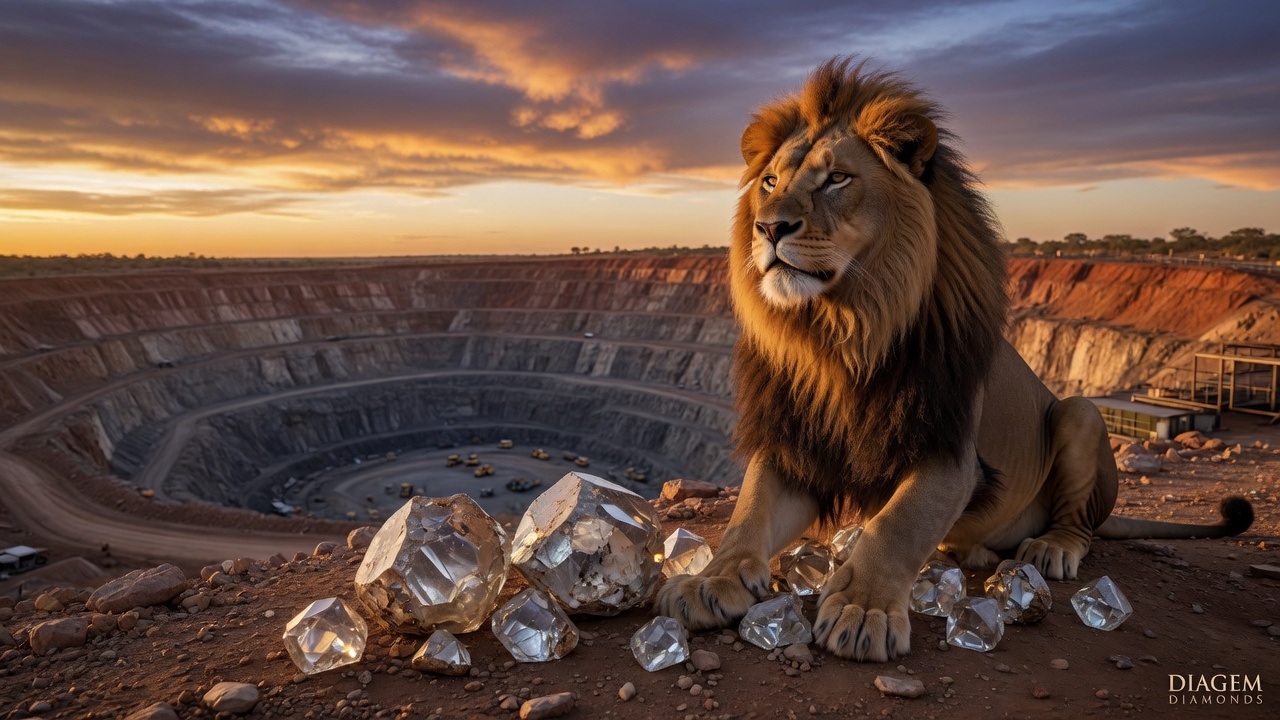
South Africa did not just produce diamonds. It created the modern diamond industry. The stone you buy in Johannesburg carries a history no jewellery mall in London or Shanghai can replicate — and the practical advantages that history built are still here today.
The Cullinan and What It Means
On 26 January 1905, a mine manager at the Premier Diamond Mine near Pretoria noticed a flash of reflected light in the wall of the mine. He picked out a stone with his penknife. It weighed 3,106 carats — the largest gem-quality rough diamond ever found.
The Cullinan was cut into nine major stones and 96 smaller brilliants. The two largest — Cullinan I (530 carats, pear-shaped) and Cullinan II (317 carats, cushion-cut) — are set in the British Crown Jewels. The Great Star of Africa and the Second Star of Africa. They remain in the Tower of London today.
No other country has a story like this. Not Belgium, not India, not Russia. The largest gem-quality diamond in history came from South African ground, and the cutting tradition that shaped modern diamond craft grew from that moment outward.
How South Africa Built the Modern Diamond Trade
The story begins earlier. In 1869, a shepherd near Hopetown found an 83-carat stone that became known as the Star of South Africa. Within a year, tens of thousands of prospectors had descended on the Northern Cape. The town of Kimberley grew from a dusty convergence of mine workings into a city.
De Beers Consolidated Mines was founded in 1888, consolidating the Kimberley claims under a single company. The cartel structure that would shape the global diamond trade for most of the twentieth century was built here. The concept of a diamond engagement ring as a cultural institution was not invented in New York — it was promoted from South African supply economics.
The Kimberley Process — the international certification framework for conflict-free rough diamonds — takes its name from this city. Born from South African and regional industry self-regulation in 2003, it is now the global standard. The infrastructure, the ethics frameworks, and the cutting traditions of the modern diamond trade trace their roots to South Africa.
Today the Johannesburg metropolitan area contains the highest concentration of independent diamond dealers and cutting houses on the African continent. This is not accident. It is accumulated expertise, capital, and reputation built over 150 years.
What Buying From Source Actually Means Today
Provenance is a real thing in diamonds — but it is also worth being precise about what it does and does not mean in practice.
A diamond sold in a London jeweller has typically passed through a cutter, a wholesaler, a distributor, a national importer, and a retail chain before reaching the buyer. Each step adds margin. Retail chains in the UK typically mark up diamonds by 200–400% over their wholesale cost. You are paying for rent on Bond Street, commission salespeople, advertising, and the prestige of the brand.
Diagem sources direct from cutting houses. Twenty-five years of trading relationships mean the stone moves from cutter to certification to buyer with the minimum number of intermediary hands. That is what factory-direct means in practice: fewer margins stacked on top of each other, and direct access to the GIA and IGI certified stones that independent dealers handle at trade prices.
This is the structural advantage of buying in Johannesburg from an established dealer. The exchange rate makes it more attractive when the rand is weak. The factory-direct model makes it more attractive always. For a full account of how the numbers work, read our post on the exchange rate advantage for international buyers.
The Certificate That Travels With You
A GIA or IGI certificate does not expire and does not belong to a country. The grading on that document — cut, colour, clarity, and carat weight — is recognised by every qualified jeweller, valuer, and insurer in the United Kingdom, China, Europe, and beyond. What you buy in Houghton Estate, Johannesburg, is valued and insured in London or Shanghai on exactly the same terms as a stone purchased in either of those cities.
Provenance adds the story. Certification adds the permanence. The two together are what make a Diagem purchase genuinely portable: a documented asset you can insure, value, sell, or pass on anywhere in the world, with a story attached that is historically unique.
Browse our GIA and IGI certified diamonds available at Diagem before your visit. Every stone has a certificate you can examine before you commit.
25 Years in One City
Diagem has operated from Johannesburg for over 25 years. Not a chain. Not a franchise. One business, one city, one specialism.
The relationships built over that time — with cutting houses, with GIA and IGI certification contacts, with the Diamond Dealers Club of South Africa (DDC SA) and the World Federation of Diamond Bourses (WFDB) trading communities — are what enable the pricing and the access that a first-time tourist buyer cannot replicate by walking into a high-street jeweller.
When you book a consultation with David, you are accessing 25 years of accumulated expertise in one conversation. He knows which cutting houses are producing well this season. He knows where the value sits in a given specification range. He has seen thousands of stones and will tell you honestly when something is not worth your budget. Learn more about the team and the business on our about Diagem Diamonds page.
Planning Your Visit
Diagem is located at Knox Safes Building, 1 River Street, Houghton Estate, Johannesburg. Viewings are strictly by appointment — this is a private showroom, not a retail shop. WhatsApp David before you arrive, share your brief, and we will have a curated selection ready for your appointment.
For everything you need to know about buying as an international visitor — VAT refunds, what to bring, how to handle customs on departure, and what to expect at the showroom — read the full guide to buying diamonds in South Africa as a visitor.
Ready to book your appointment? WhatsApp David — he will prepare a selection matched to your requirements before you arrive.
WhatsApp David Now